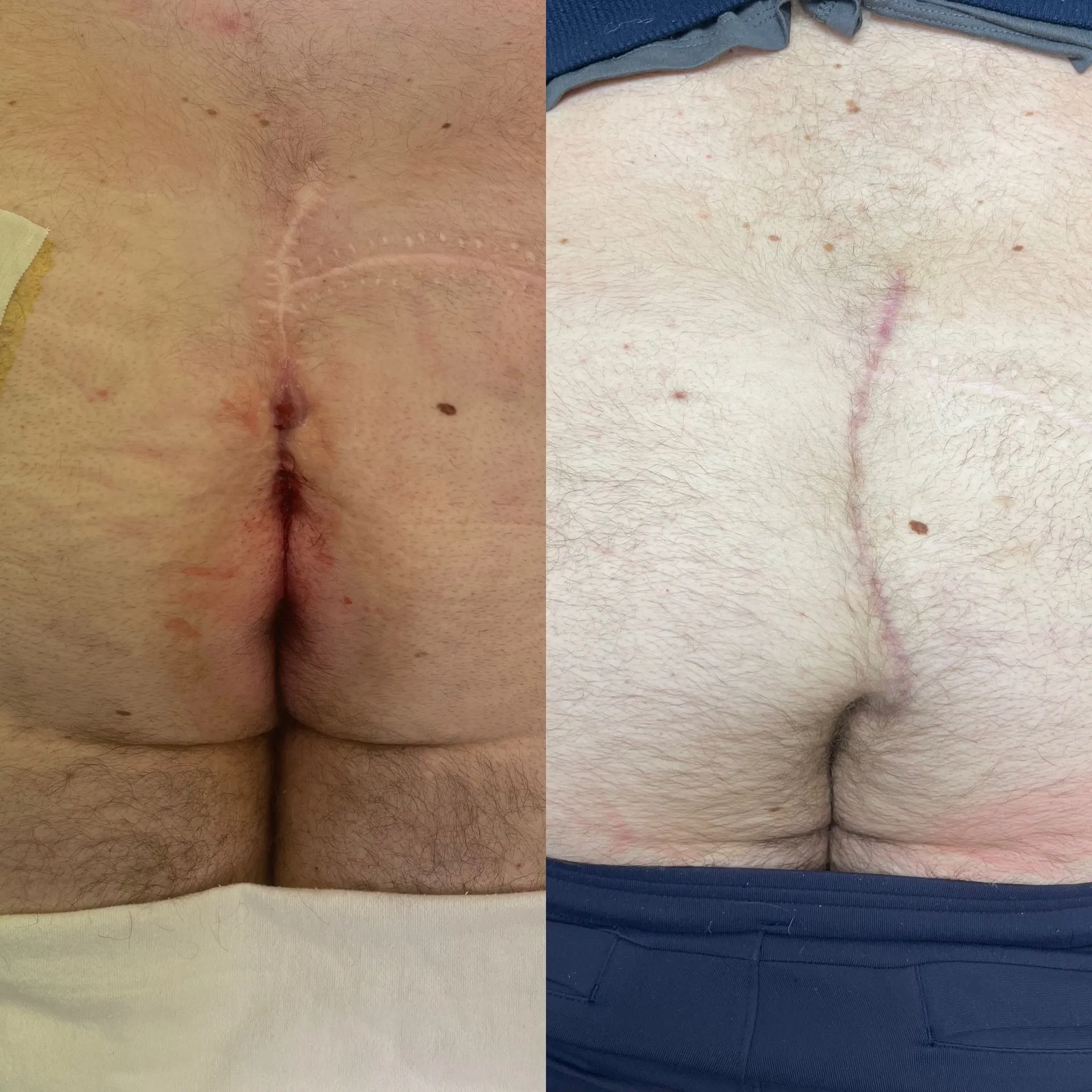
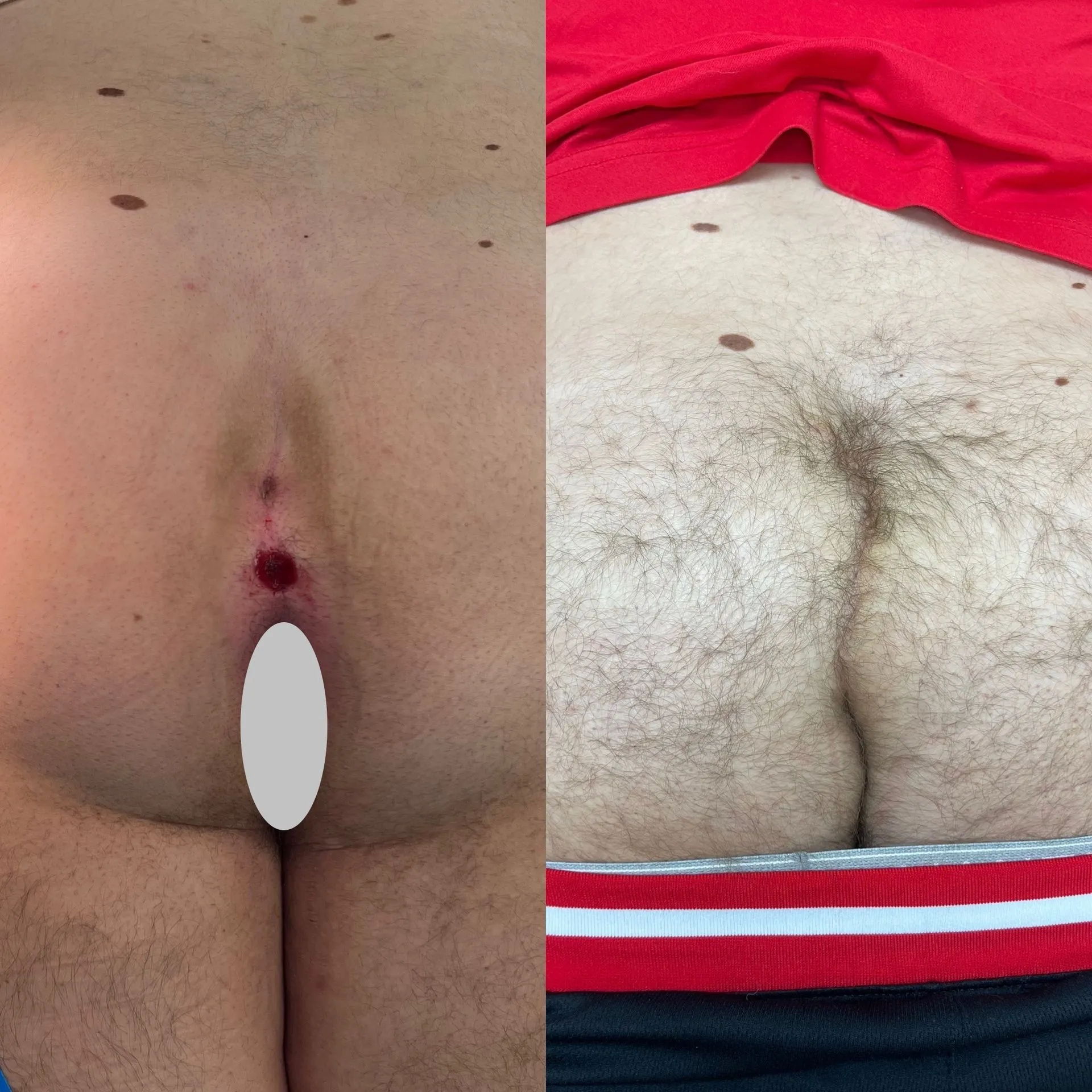
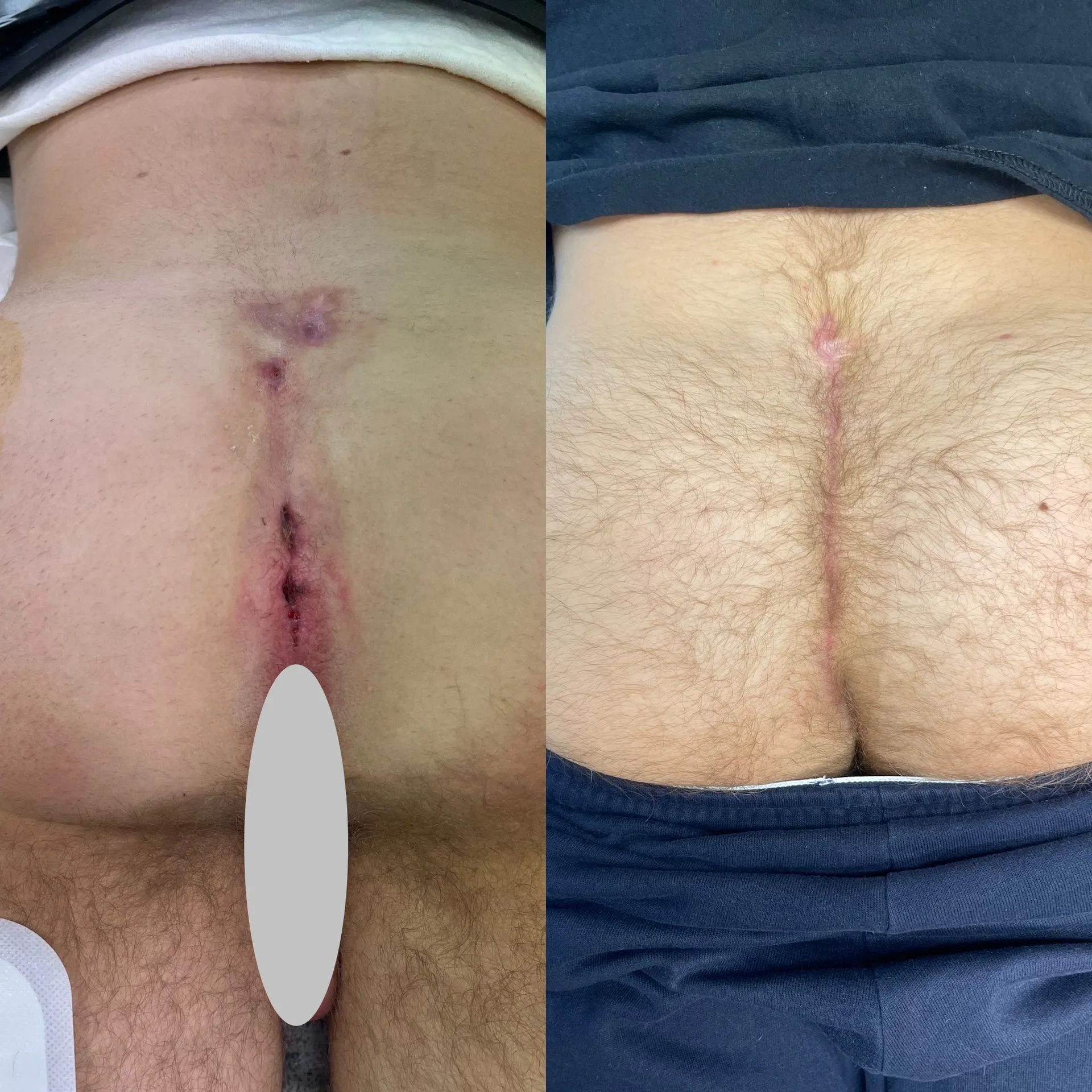
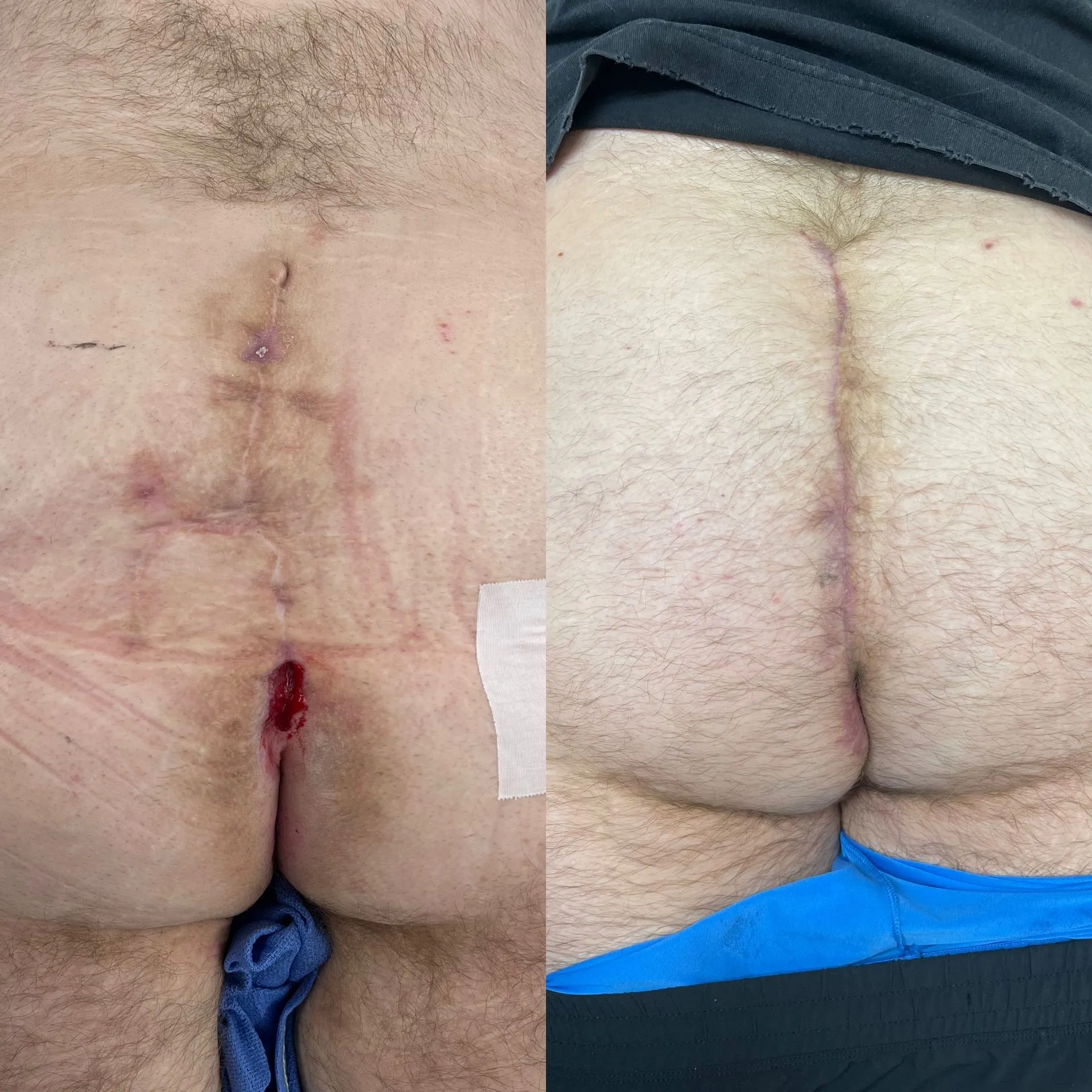
Pilonidal cyst pictures before and after
This page provides before and after photos of pilonidal cyst treatment results.
Introduction
Welcome to our comprehensive gallery of pilonidal cyst before and after photos. This page is designed for patients considering pilonidal cyst surgery, their families, and anyone seeking to understand the outcomes of modern pilonidal disease treatment. Viewing before and after images is an important step in making informed decisions about your care, as these photos provide real-life examples of what to expect from surgery and the healing process.
What to Expect in Pilonidal Cyst Before and After Photos at pilofix
Please note: The images on this page may be graphic and could be disturbing to some viewers, as they show the surgical result and healing process in detail.
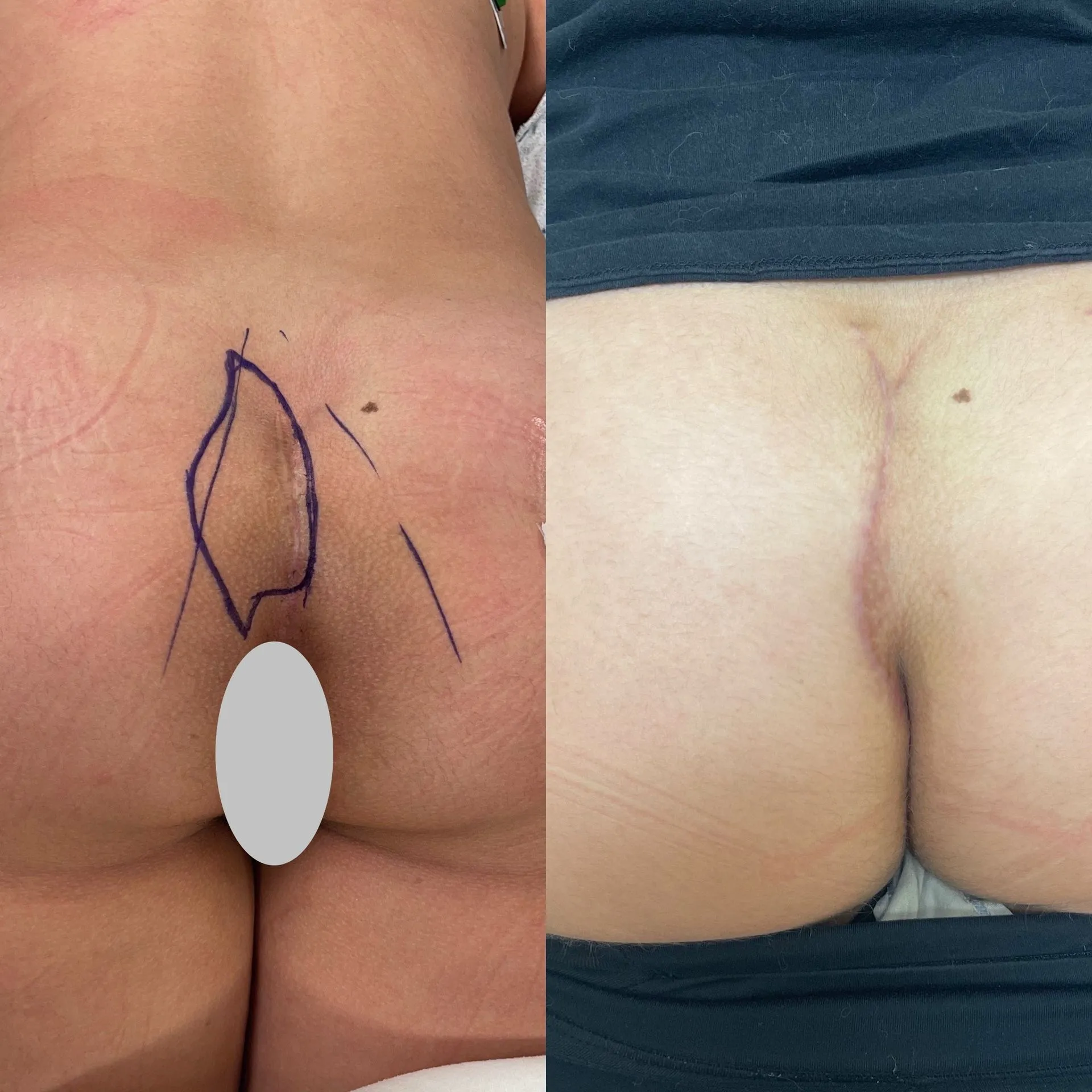
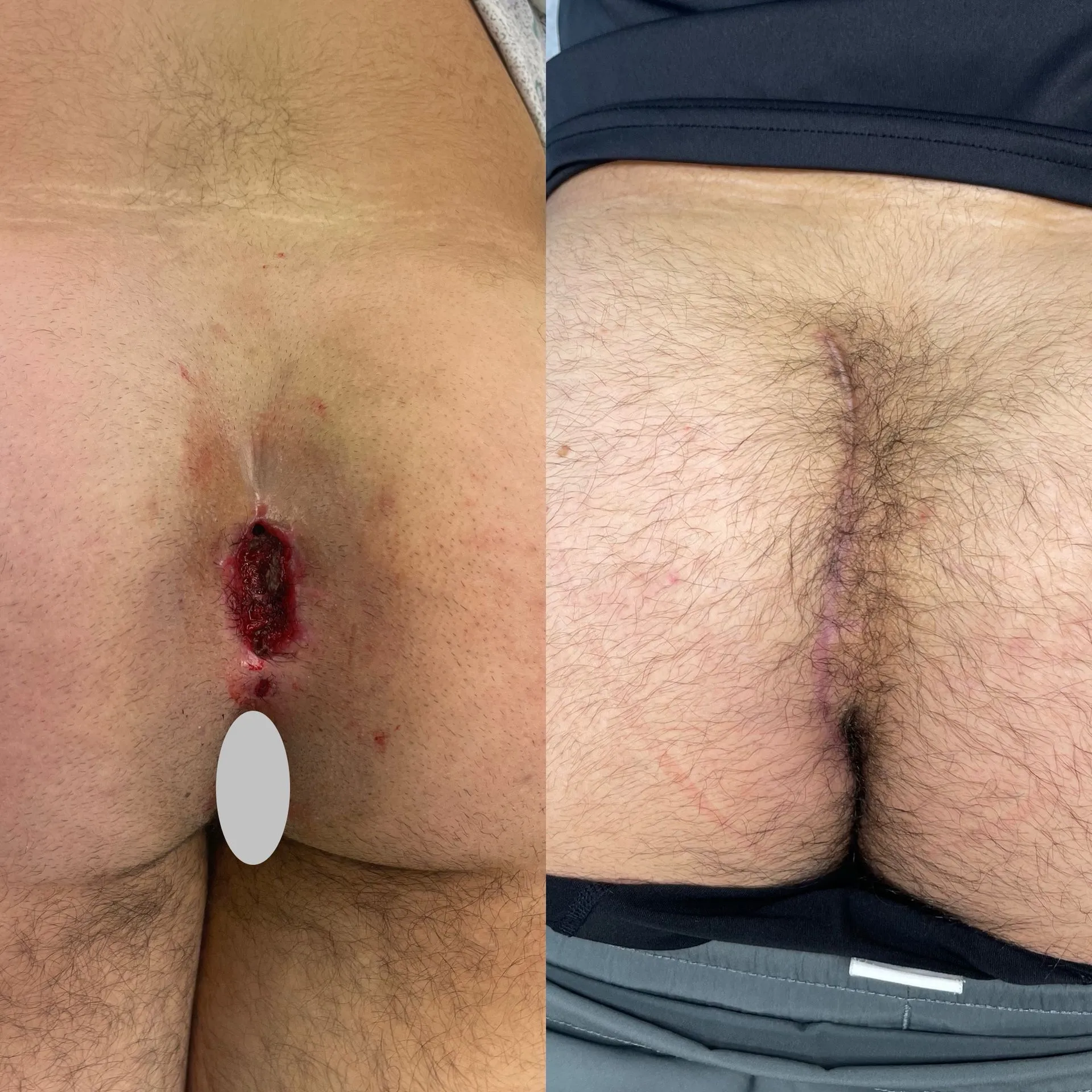
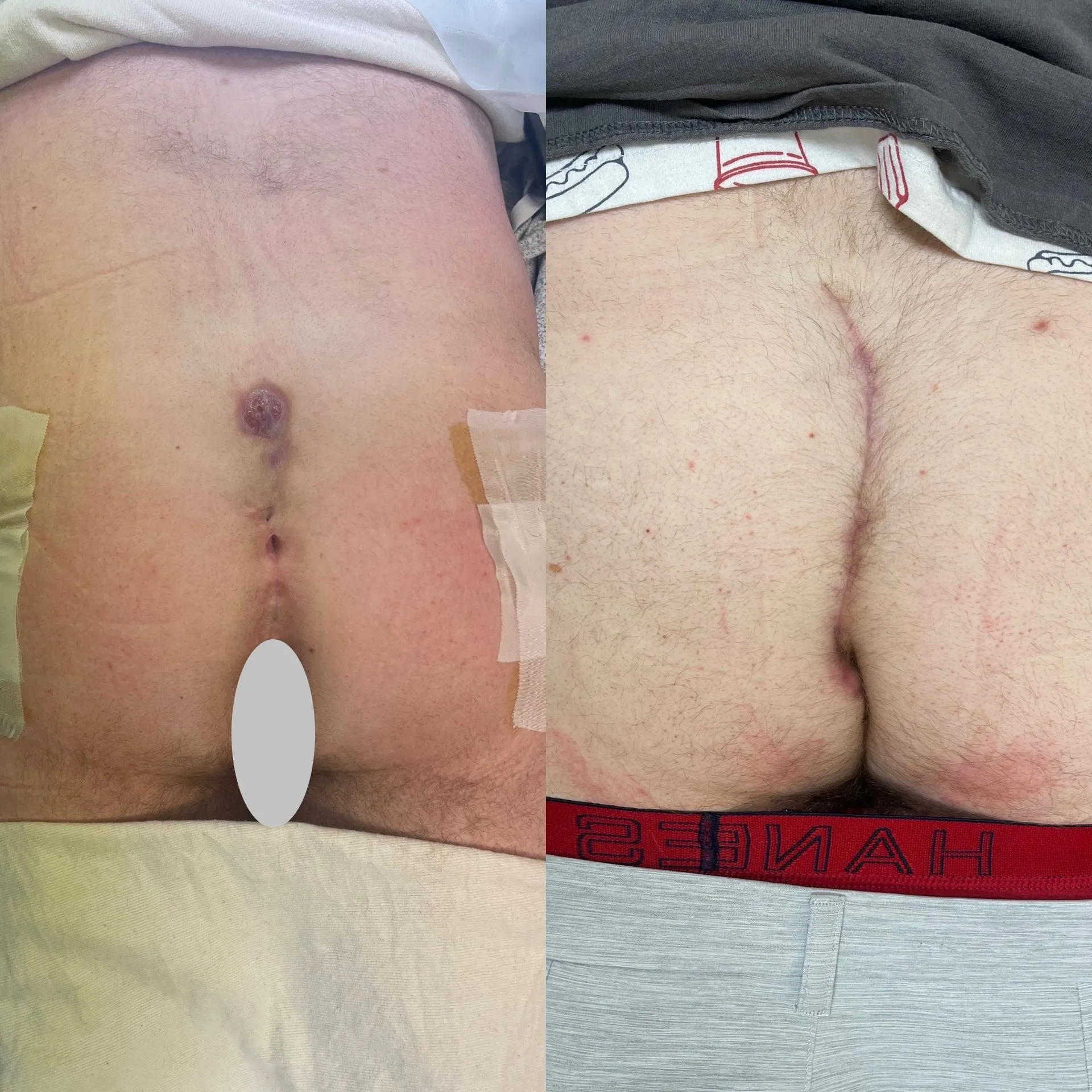
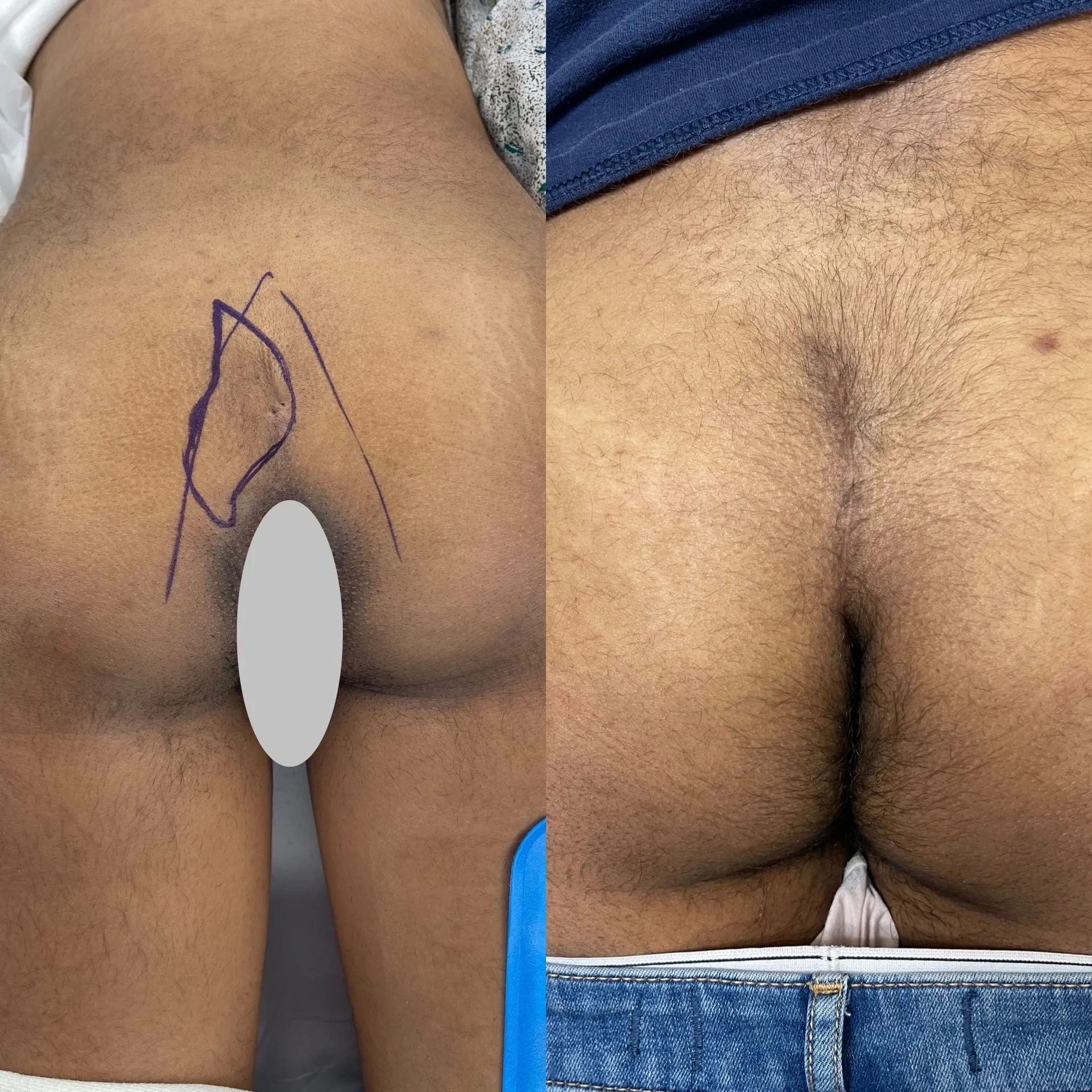
- Before treatment: Pilonidal cysts often appear as inflamed bumps, boils, or small pits located directly in the cleft at the top of the buttocks. The area may be red, swollen, and tender, sometimes with visible drainage or sinus tracts (small, persistent holes that may leak pus or blood).
- After treatment: The goal is to allow the buttock cleft to heal, resulting in a flatter, shallower area to prevent recurrence. A successful surgery usually leads to a less deep buttock contour and a closed incision, while failed surgeries can leave persistent open midline wounds.
- Typical results: After healing, the area should look less inflamed, with a smoother contour and no visible pits or drainage.
Pilonidal Cysts
What is a Pilonidal Cyst?
A pilonidal cyst is a painful, infected abscess or small tunnel that forms in the buttock crease near the tailbone, often caused by hair becoming trapped under the skin. These cysts are typically located near the tailbone, in the cleft between the buttocks and close to the anus. The cyst develops inside the tissue beneath the skin, often in the midline but sometimes on the right or left side.
Symptoms and Diagnosis
Anatomical marks, such as the horizontal line that marks the lowest part of the buttock, can help identify the affected area. Signs and symptoms of pilonidal disease may include:
- Pain or tenderness in the buttock crease
- Swelling or a lump near the tailbone
- Drainage of pus or blood
- Visible pits or small holes (sinus tracts)
- Redness or warmth in the area
Some patients present with large cysts or sinus tracts. A sinus tract is a small, persistent hole that may leak pus or blood.
Who is at Risk?
Pilonidal disease is more common in young adult male patients, especially those with a history of prior operations or failed treatments. The condition can be chronic and recurrent, leading many to seek specialized pilonidal disease treatment after other approaches have not worked.
Treatment Options
The cleft lift procedure is a minimally invasive operation performed by an experienced surgeon in an office setting. During the procedure, the surgeon makes incisions to remove the cyst and infected material. Depending on the operation, the area may be left open or closed with sutures.
- Cleft lift: A surgical technique that removes the cyst and reshapes the buttock cleft to prevent recurrence.
- Wide excision: Removal of the cyst and surrounding tissue, sometimes leaving an open wound to heal from the inside out.
This cleft-lift procedure for pilonidal disease helps patients avoid the prolonged recovery and discomfort associated with traditional wide excision surgery.
Wound Care After Surgery
After having a pilonidal cyst removed, proper wound care is essential. Key steps include:
- Changing the dressing regularly to protect the wound
- Keeping the area clean and dry
- Preventing infection by following your surgeon’s instructions
- Monitoring for signs of infection (increased redness, swelling, pain, or discharge)
In some cases, the wound is left open to heal from the inside out, especially after a wide excision, which may result in an open wound that requires ongoing care and attention to prevent pilonidal disease recurrence.
Complications and Recovery
Complications can include:
- Persistent drainage
- Non-healing wounds
- Breakdown of the surgical site
- Development of an open wound if the surgical site is left open after a wide excision
Some patients may require additional pilonidal disease treatment in Fair Lawn, NJ.
Many patients are grateful for the compassionate care they receive, feel hope for a full recovery, and would recommend the procedure to others after having their pilonidal cyst removed, as reflected in pilonidal disease patient testimonials.
Next, we will discuss the causes and risk factors for pilonidal disease.
Causes and Risk Factors
How Pilonidal Cysts Develop
Pilonidal cysts develop when coarse hair becomes trapped beneath the skin, most often in the cleft between the buttocks. This trapped hair can trigger inflammation and infection, leading to the formation of a painful cyst.
Another contributing factor is the stretching and rupture of deep skin layers, which can cause hair follicles to enlarge and break open, allowing hair and debris to become embedded. Once this occurs, the body reacts by forming a cyst around the affected area, which can fill with pus and infected material.
Risk Factors
Certain factors increase the risk of developing pilonidal disease, including:
- Being male (men are more frequently affected than women)
- Young adult age group
- Family history of pilonidal disease
- Prolonged sitting (e.g., truck drivers, office workers)
- Wearing tight clothing
- Activities that create friction or pressure on the skin (bicycling, long periods of sitting)
- Excess body hair or coarse hair
Historically, pilonidal disease gained notoriety during World War II, when it was commonly seen in soldiers who spent long hours sitting in military vehicles—earning it the nickname “Jeep Disease.” Today, lifestyle factors remain important contributors.
Complications of Untreated Pilonidal Cysts
When pilonidal cysts are left untreated, they can progress to more serious complications, such as:
- Abscesses (collections of pus)
- Chronic sinus tracts (persistent holes that may leak pus or blood)
- Persistent pain or discomfort
- Recurrent infections
Treatment and Prevention
For patients experiencing discomfort, drainage, or recurrent infections, the cleft lift procedure offers an effective solution. This surgery involves a small incision to remove the infected material and reshape the cleft, reducing the risk of recurrence by eliminating midline pits and preventing hair from re-entering the area.
The cleft lift is typically performed under local anesthesia, allowing most patients to return home the same day, especially when performed as expert cleft-lift surgery by Dr. Rafailov.
Wound Care and Recovery
Proper wound care is essential after cyst removal. Patients should:
- Keep the wound clean and dry
- Change dressings as directed
- Take prescribed antibiotics to prevent infection
- Monitor for pilonidal disease symptoms and signs of infection, such as increased redness, swelling, pain, or discharge
The healing process can take several weeks to a few months, depending on the size of the wound and individual factors. With attentive care and regular follow-up, most patients experience a smooth recovery and a significant improvement in quality of life.
Understanding the causes and risk factors of pilonidal disease empowers patients to take proactive steps in prevention and treatment. If you notice symptoms or have concerns about pilonidal cysts, don’t hesitate to reach out to a specialist. At Pilonidal Fix, our team is dedicated to providing expert care and effective solutions, including pilonidal disease treatment in Princeton, New Jersey and ongoing education through our Pilonidal Disease Blog, helping you heal and return to your normal activities with confidence.
Now, let's look at real-life examples of pilonidal cyst treatment outcomes in our photo gallery.
Photo Gallery: Pilonidal Cyst Before and After
What is a Pilonidal Cyst and What Do the Photos Show?
A pilonidal cyst is a painful, infected abscess or small tunnel that forms in the buttock crease near the tailbone, often caused by hair becoming trapped under the skin. Pilonidal cysts are commonly located near the tailbone, directly above the cleft in the buttocks. Before treatment, pilonidal cysts often appear as inflamed bumps, boils, or small pits located directly in the cleft at the top of the buttocks. After treatment, the area may appear flatter, less inflamed, and with a shallower contour to prevent recurrence.
The following are photographs of 9 cleft-lifts done by Dr. Rafailov. “Before” image is on the left. Each “after” image represents full healing at 3-10 weeks.
CONTACT US TODAY!
Contact us today and let us help you leave your pain behind.